Loading...
Loading...
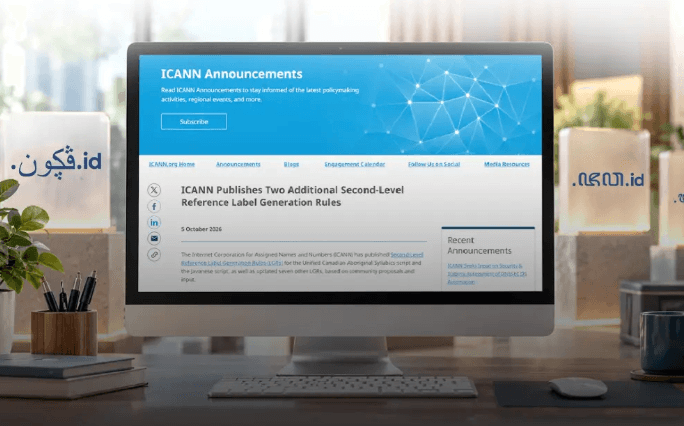
Jakarta, Indonesia – Efforts to bring Indonesia's traditional scripts into the global internet ecosystem continue to make significant progress. On October 5, 2026, the Internet Corporation for Assigned Names and Numbers (ICANN) officially published the Second-Level Reference Label Generation Rules (LGR) for the Javanese script, alongside updates to the Reference LGR for Arabic-based scripts.
This development marks an important step toward supporting the use of traditional writing systems in domain names while strengthening the representation of Indonesia's linguistic and cultural diversity in the digital world.
The Indonesia Internet Domain Name Registry (PANDI) remains committed to advancing the integration of Nusantara scripts into internet technology, ensuring that Indonesia's cultural heritage can continue to evolve alongside digital transformation.
The publication of the Second-Level Reference LGR for the Javanese script represents an important milestone in the international standardization of Nusantara scripts.
Label Generation Rules (LGR) define the technical requirements for characters permitted in domain name labels, including rules governing character combinations and variants.
Reference LGRs provide guidance for domain registry operators seeking to support different writing systems while maintaining consistency, security, and technical compatibility.
With the publication of the Javanese Reference LGR, new opportunities are emerging for the script to be incorporated into domain name systems. However, actual implementation will still depend on the technical requirements and policies adopted by individual domain registry operators.
This milestone highlights the potential for traditional writing systems to become part of modern internet infrastructure.
In addition to the Javanese script, ICANN has updated the Reference LGR for Arabic-based scripts, creating broader opportunities for writing traditions such as Jawi, Pegon, Serang, Buri Wulio, and Arab Melayu.
These scripts hold significant historical and cultural value and represent an important part of the diverse writing traditions found throughout the Indonesian archipelago.
The updated Reference LGR provides a stronger technical foundation for exploring the inclusion of these scripts in domain name systems.
This development also supports efforts to create a more inclusive internet environment that accommodates linguistic diversity and different writing systems.
The journey toward bringing Nusantara scripts into the global digital ecosystem does not end with the Javanese script.
PANDI continues to promote the development and standardization of other traditional Indonesian scripts, including Batak, Bugis, and Sundanese, as part of ongoing efforts to advance them toward future Reference LGR processes.
These initiatives require collaboration among academic institutions, linguists, cultural preservation communities, and internet technology stakeholders.
By bringing together cultural expertise and technical knowledge, PANDI aims to support the development of standards that respect the original characteristics of traditional scripts while enabling their potential integration into modern digital systems.
Such efforts form part of a broader commitment to ensuring that Indonesia's local identities have greater opportunities to be represented in the global internet ecosystem.
The continued progress of Nusantara script standardization demonstrates that cultural preservation and technological innovation can move forward together.
Traditional scripts are more than historical artifacts. They are living expressions of cultural identity with the potential to remain relevant in modern society.
Through international standardization efforts and the development of digital infrastructure, Nusantara scripts are expected to become increasingly accessible and usable for future generations.
PANDI remains committed to supporting the representation of Indonesia's diverse writing systems within a more inclusive and culturally representative internet ecosystem.
Preserving Nusantara scripts is not only about protecting the heritage of the past. It is also about ensuring that Indonesia's cultural identity continues to have a meaningful place in the global digital future.
Tags: PANDI, ICANN, Javanese Script, Nusantara Scripts, Reference LGR, Label Generation Rules, Batak Script, Bugis Script, Sundanese Script, Domain Names, Digital Transformation.
 Information
September 1, 2026
Technological development does not have to distance culture from younger generations. Instead, the digital space can serve as a new bridge to keep cultural heritage alive and relevant. Through the collaboration between PANDI and the Language Development and Cultivation Agency, Nusantara Scripts are brought into the digital space through the Children’s Folktale Writing Competition, bringing together literacy, creativity, technology, and culture in one meaningful movement.
 Information
October 15, 2026
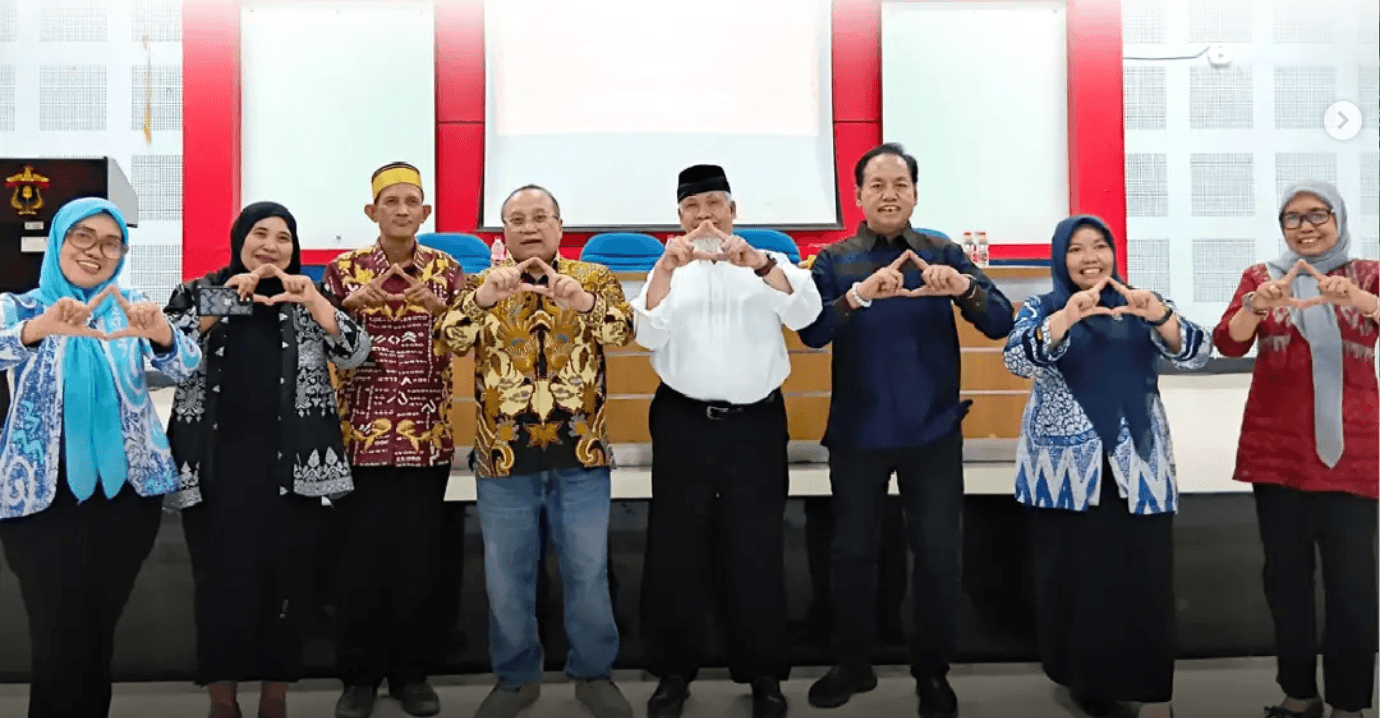
PANDI and the Faculty of Cultural Sciences at Hasanuddin University collaborate to develop LGR and RSNI standards for the Lontara Bugis script, supporting standardization, cultural preservation, and its integration into the digital ecosystem.
 Information
October 2, 2026
Entering General Availability (GA) on October 5, 2026, .ai.id is now broadly available to the public. Anyone can register an available .ai.id domain through an official domain.id registrar on a first-come, first-served basis. Discover how .ai.id can become part of your digital identity in the AI era.